Dark Matter
Justin Hibbs
Arróniz Arte Contemporáneo
23 | 04 | 2026 - 08 | 2026
Tabasco 198, Roma Nte. Cuauhtémoc, 06700 Ciudad de México, CDMX
Rewind, Selector
Martin Herbert
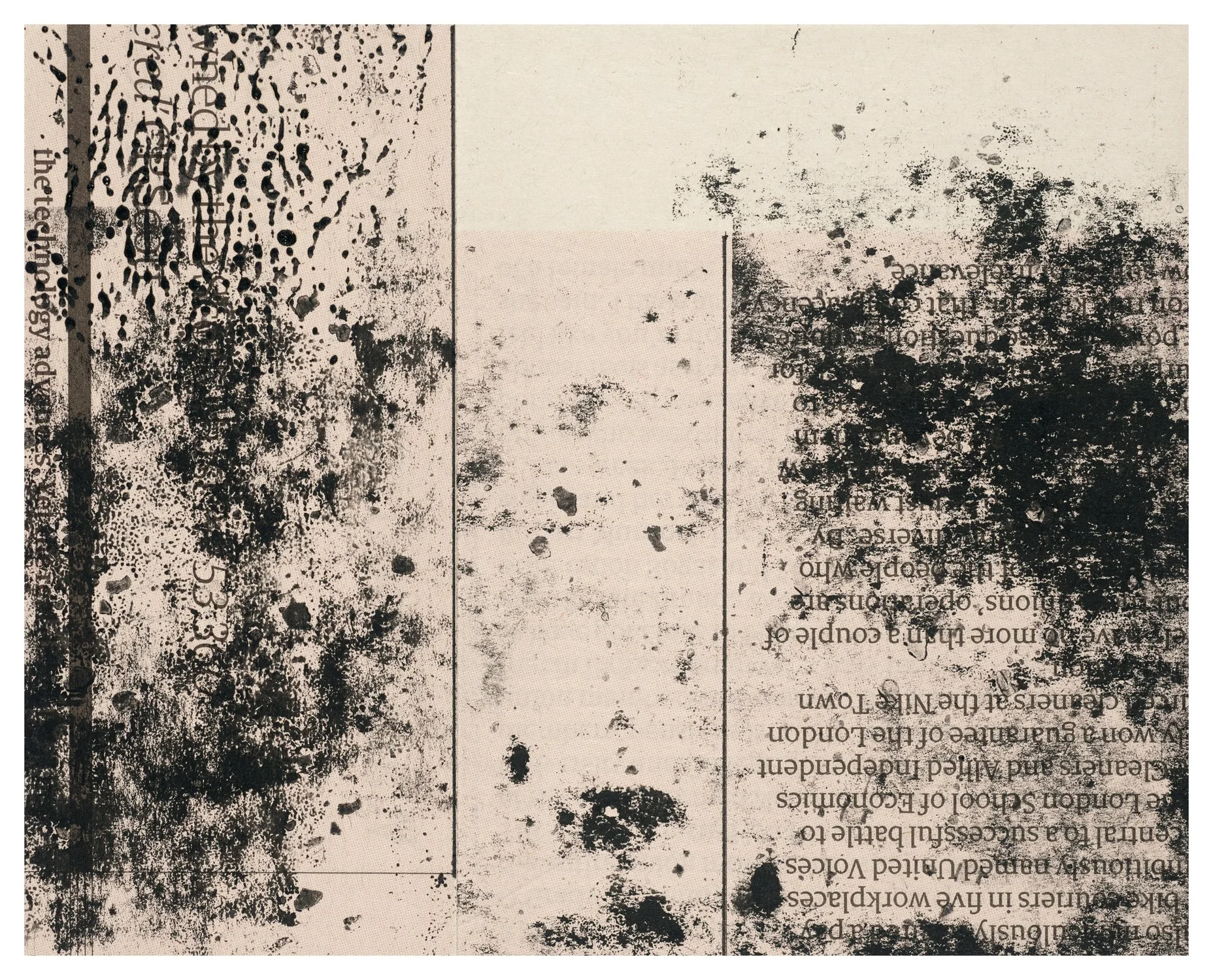
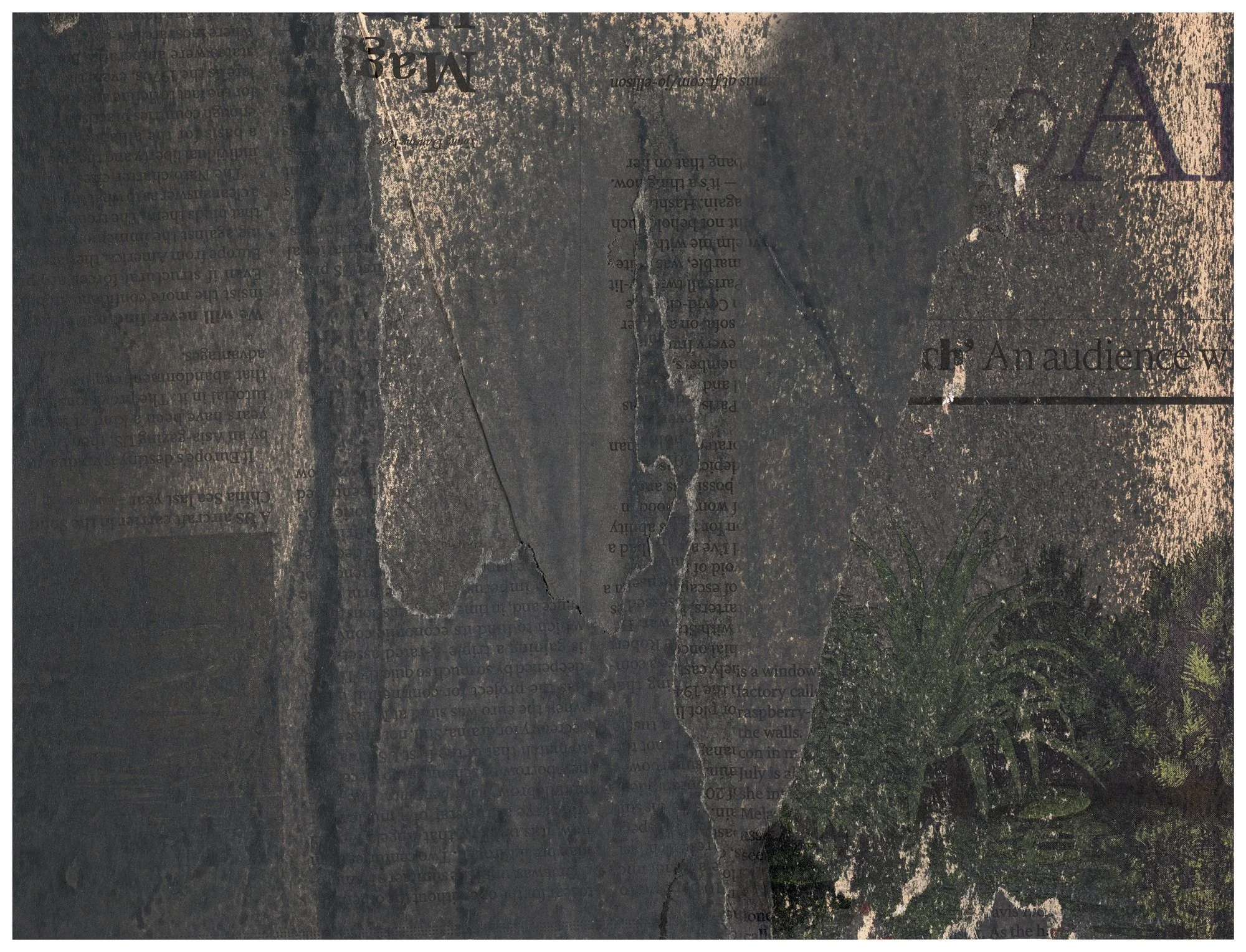
To get where we’re going, we need to go back. In 2018, when Justin Hibbs was in the process of preparing his previous show at Arroniz, he made a series of paintings using printmaking rollers and pinstriping tools, removing excess ink by rolling and wiping these devices on then-recent newspapers. The paintings themselves, in which he’d aimed at marks suggestive of visual equivalents to extramusical noise – vinyl crackle, amp hum, etc – Hibbs later found too self-conscious and deliberate: faults sidestepped by the broadsheets he’d inked up between passes, not that he could quite see that at the time. Tidying his studio and accepting that not everything works out, he nevertheless glimpsed a kernel of something in his pile of sullied dailies – the negative space of those abortive paintings – and snipped out some 20 fragments; on a hunch, he kept these, though still filed them away.
Later, inching towards the world outside, these became a small black book of extracts, a private codex of sorts, waiting until Hibbs rephotographed details from that volume to make the present large-scale works – a slow-motion zooming in. Given how much structurally deployed betweenness and fecund conversational interplay between media is built into Hibbs’s practice, it’s apt that these works sit at a crossroads between not only visual art and sound, but between painting, photography and printmaking, modest origin and expansive statement. They had to arrive, it turned out, in a dialogue between not thinking and clear thinking, distracted but sincere blurt and finessed edit. As art that analogises an abstract background hum, meanwhile, they also mediate between the present and the past – between the news cycle of eight years ago and today’s; between embryonic patterns and things that, in the second decade of this century, and with the benefit of hindsight, have become scarily clear.
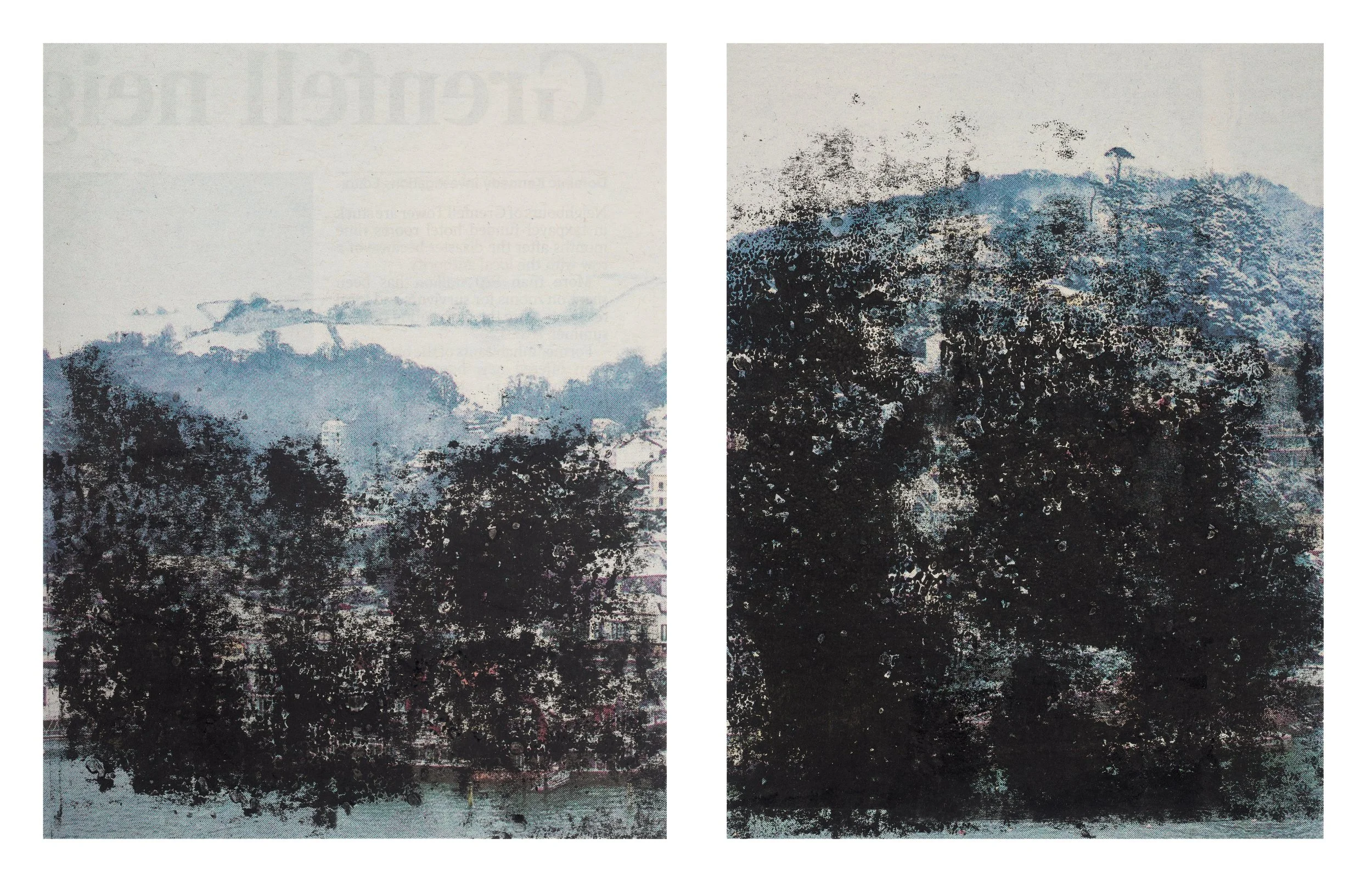
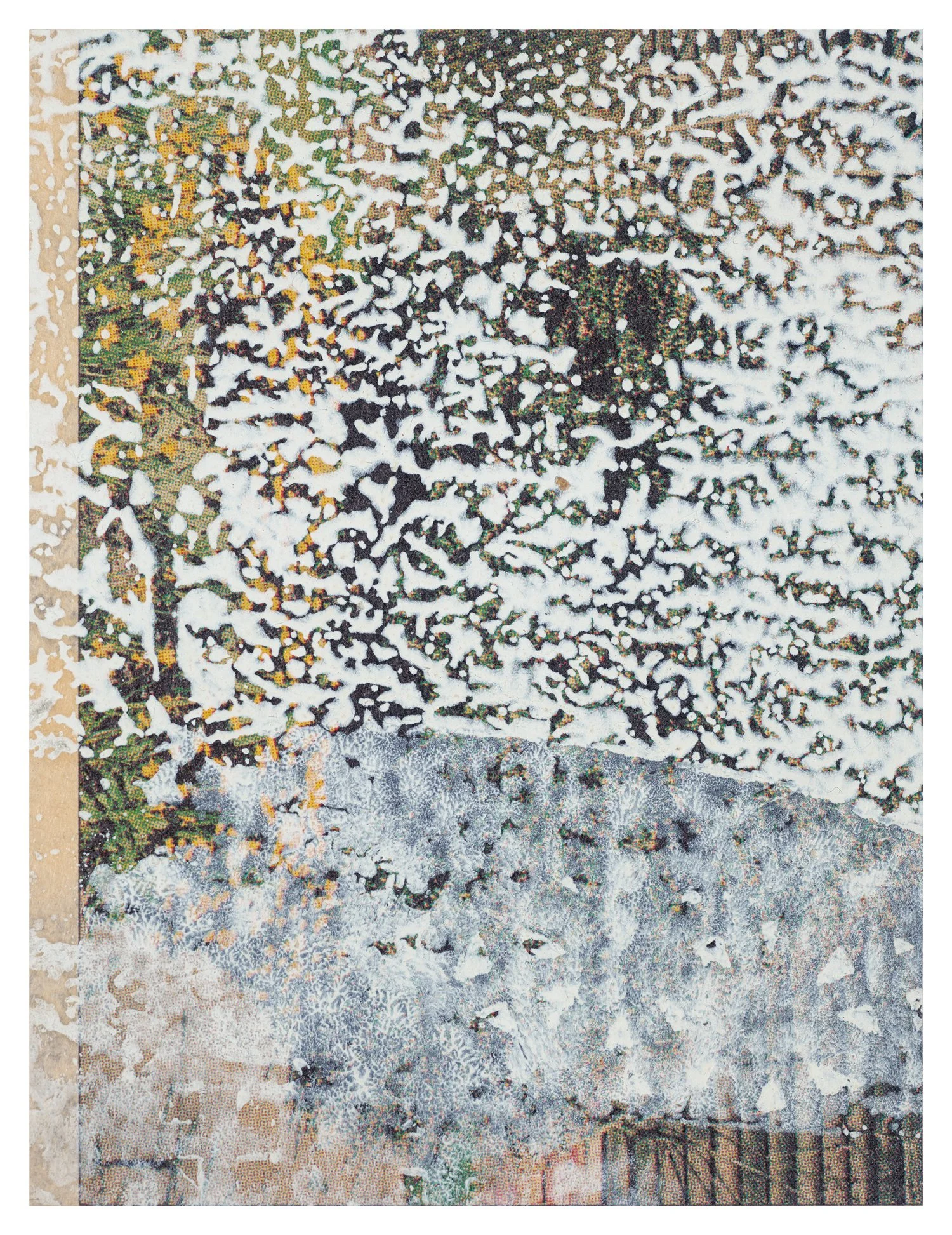
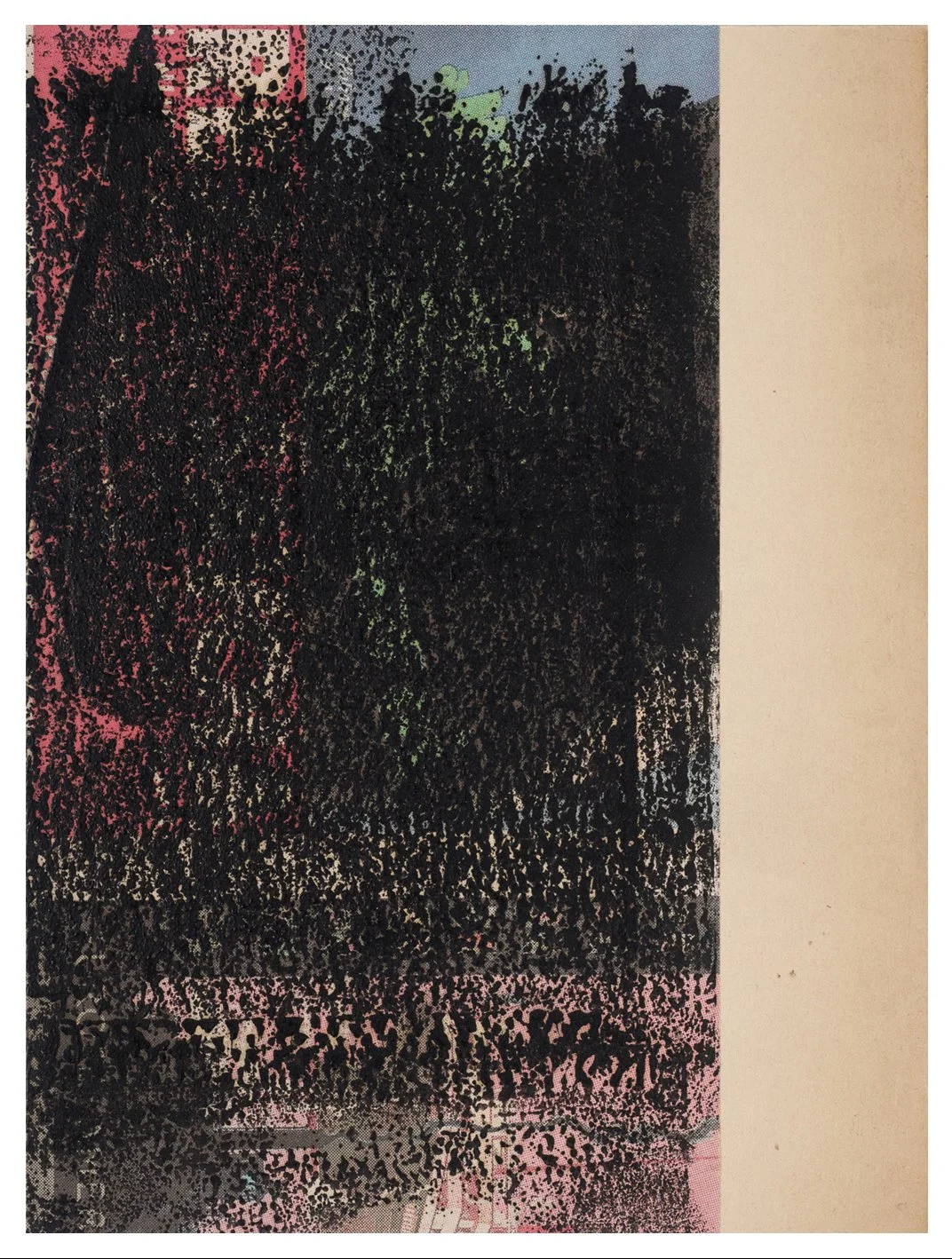
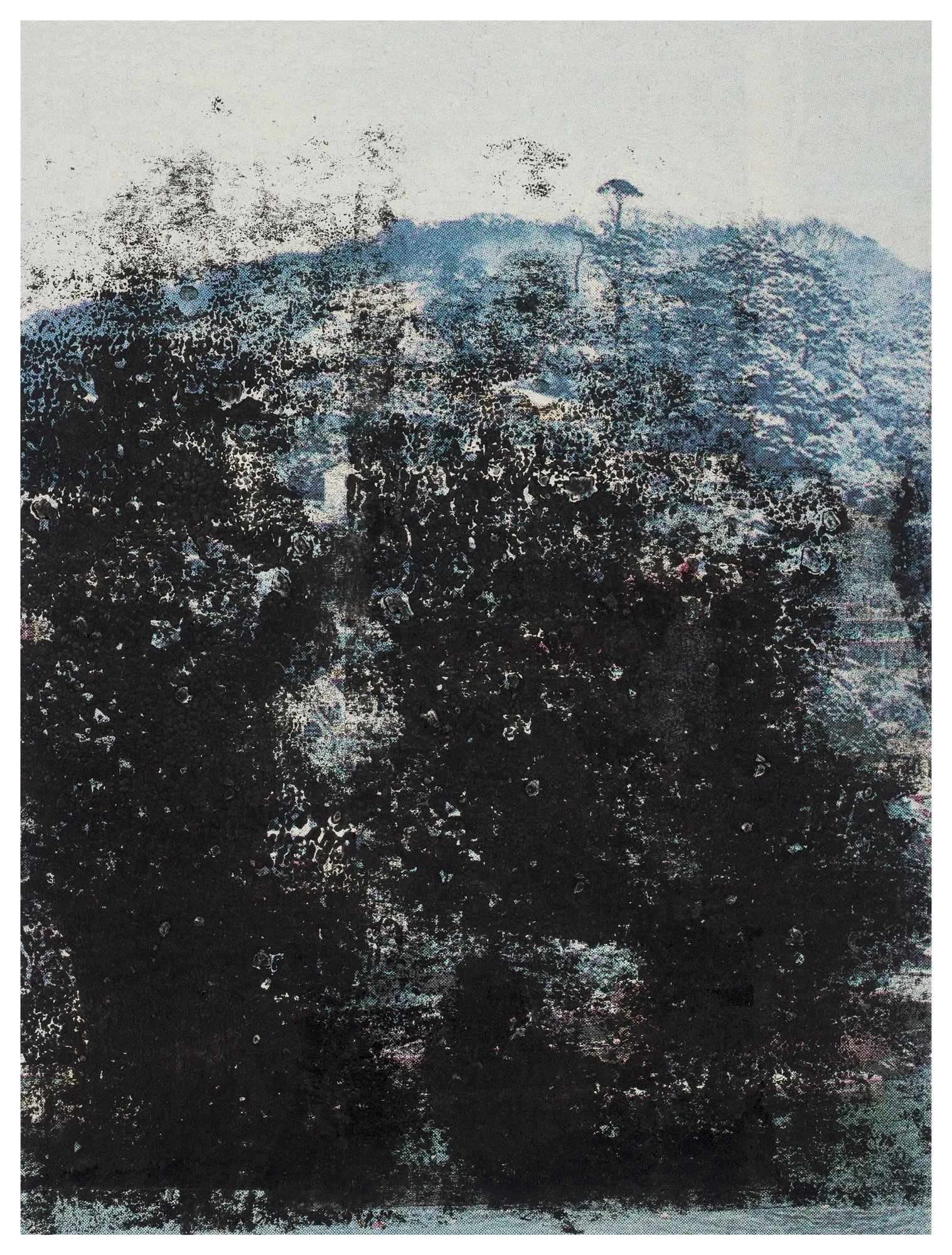
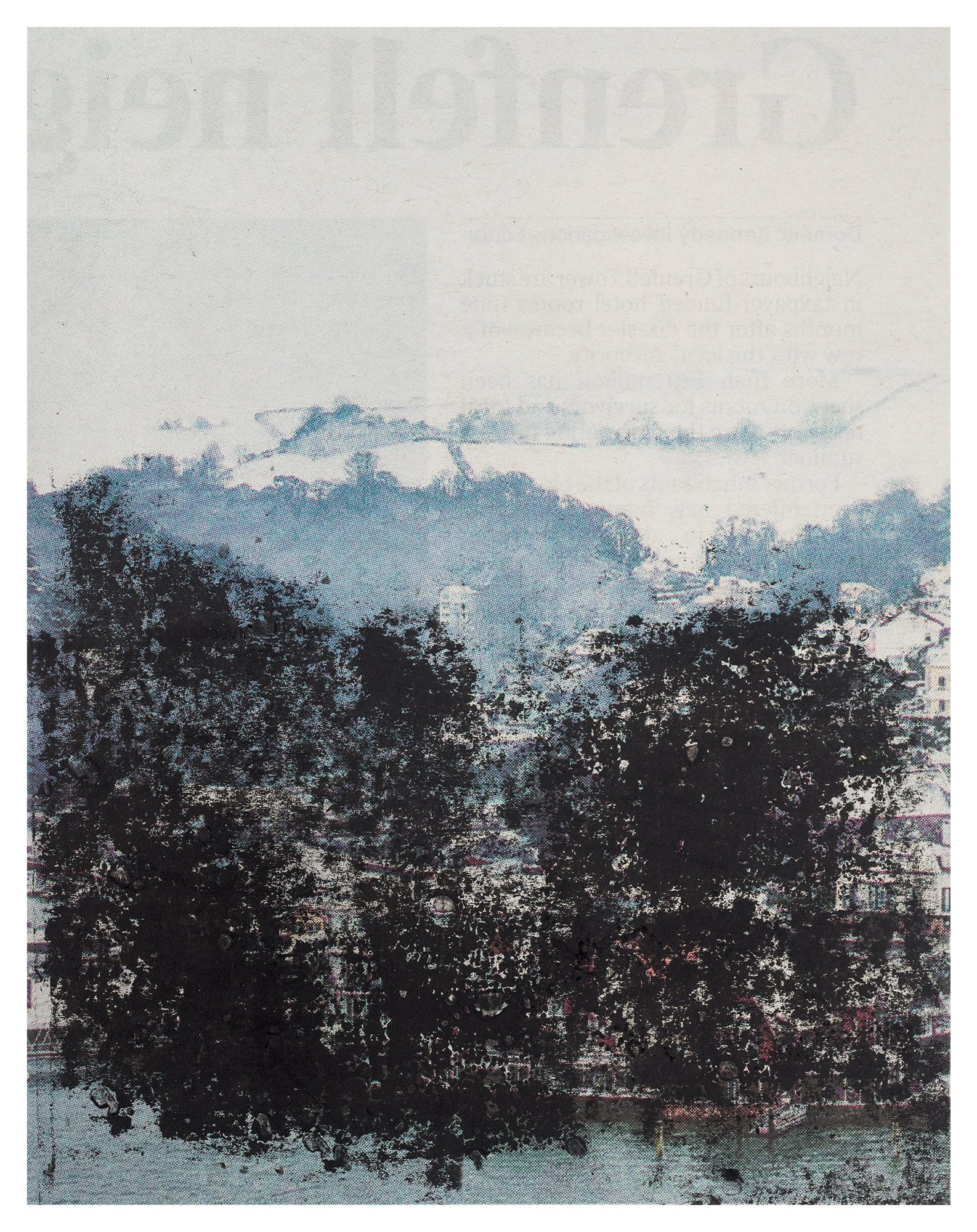
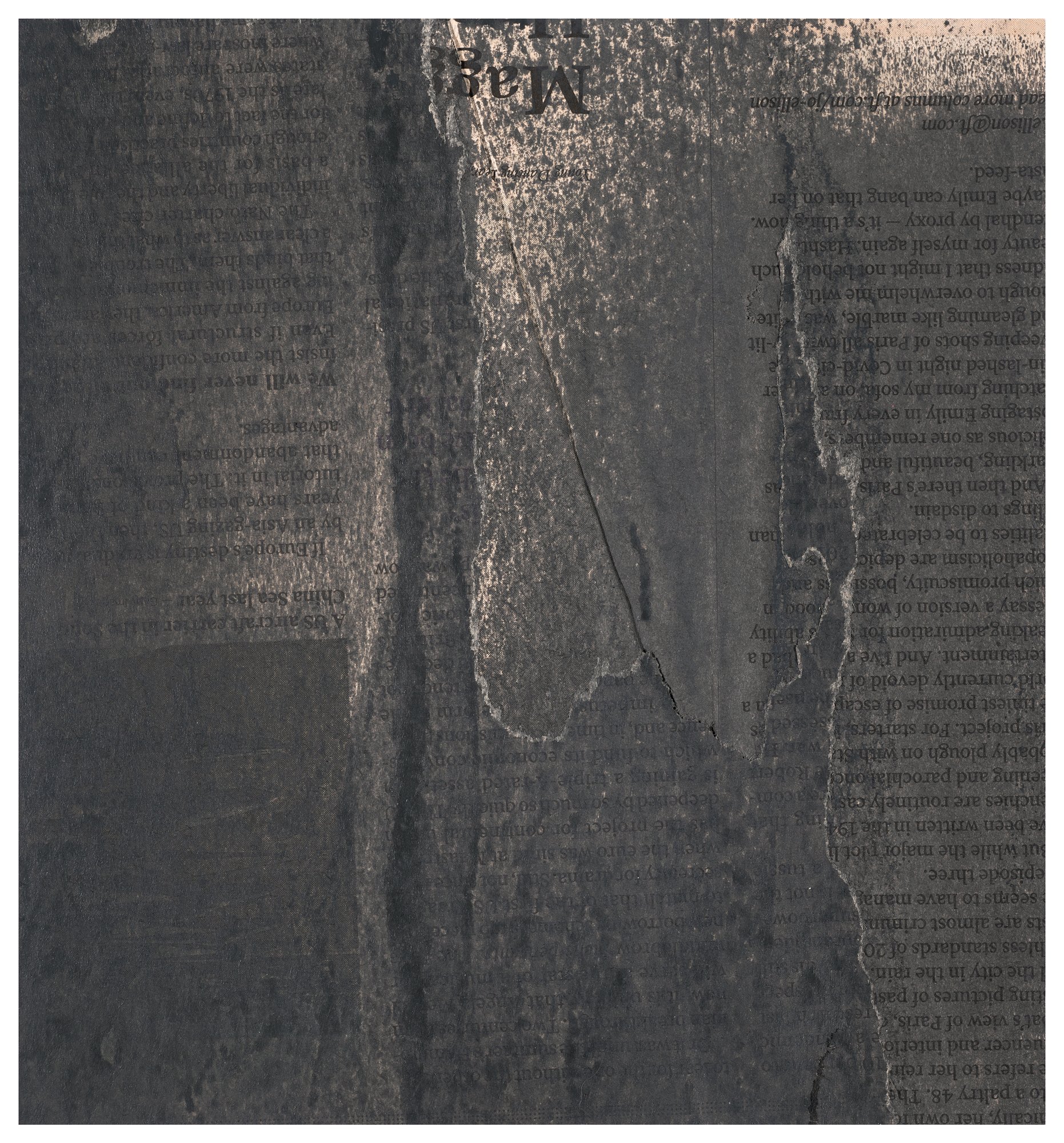
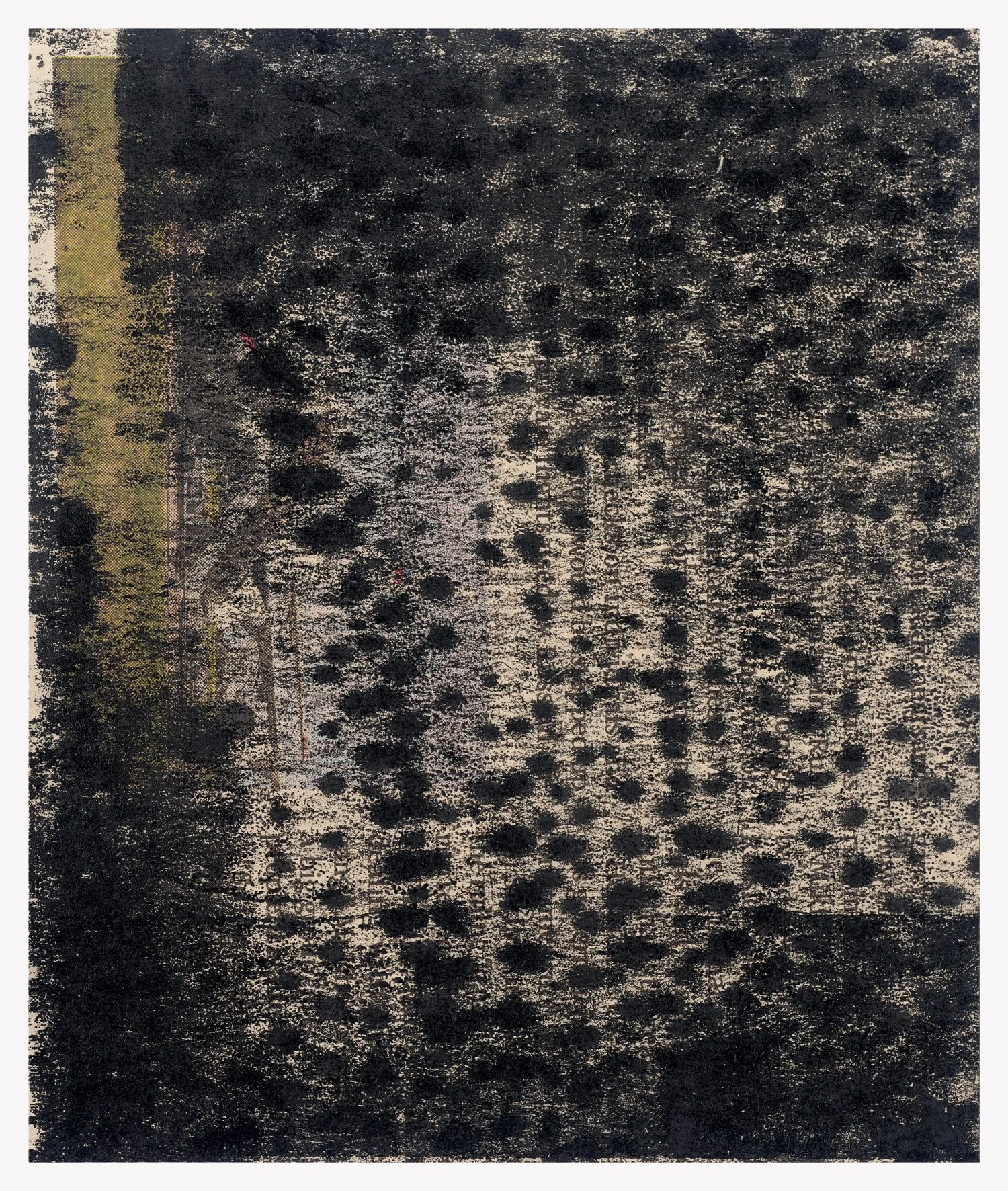
Fell, (2018-26), digital print on Hahnemuhle paper, 22 x 17.2cm. Carbon Bloom, (2018-26), digital print on Hahnemuhle paper, 240 x 180cm.
Install Images below courtesy of Arroniz.
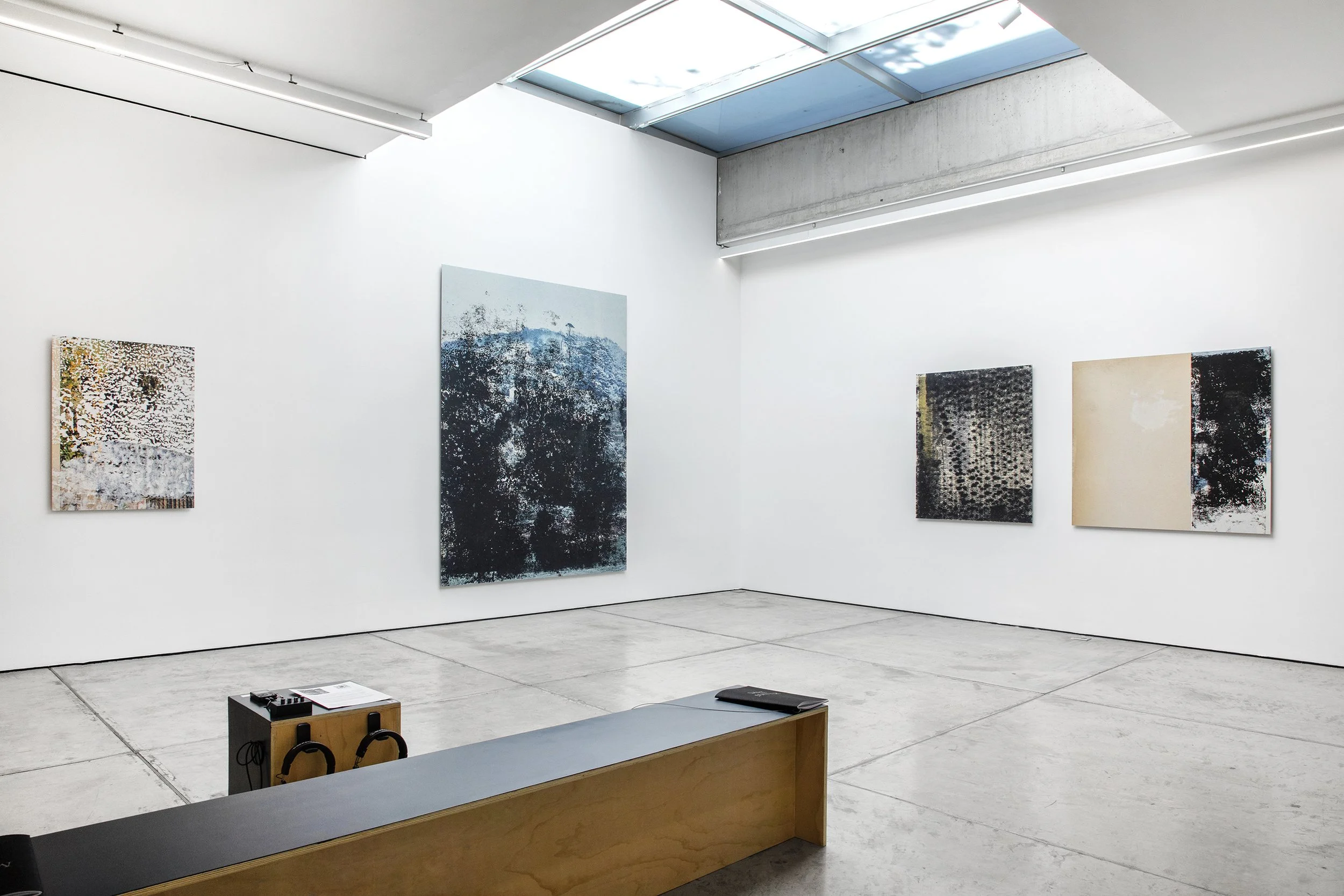
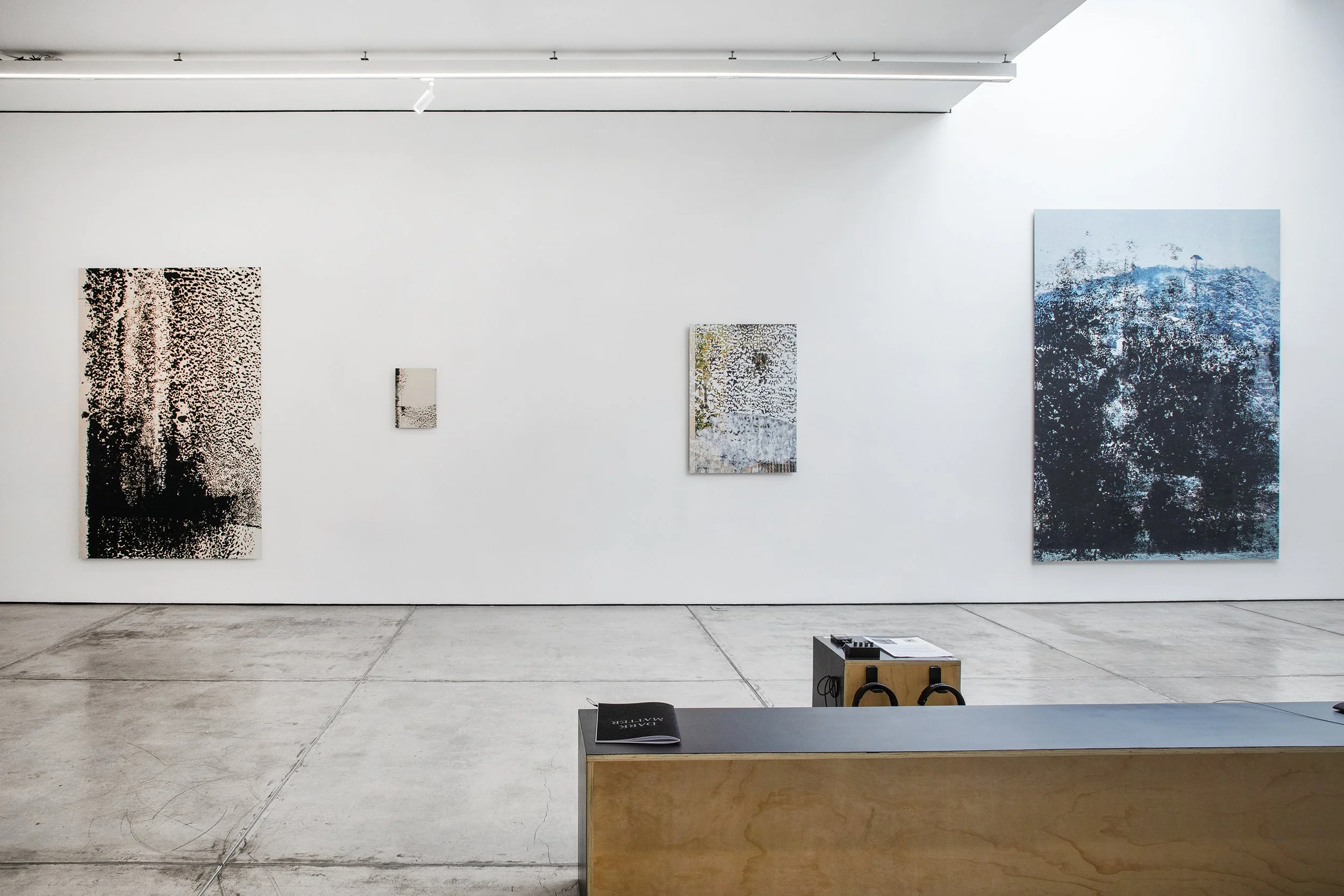
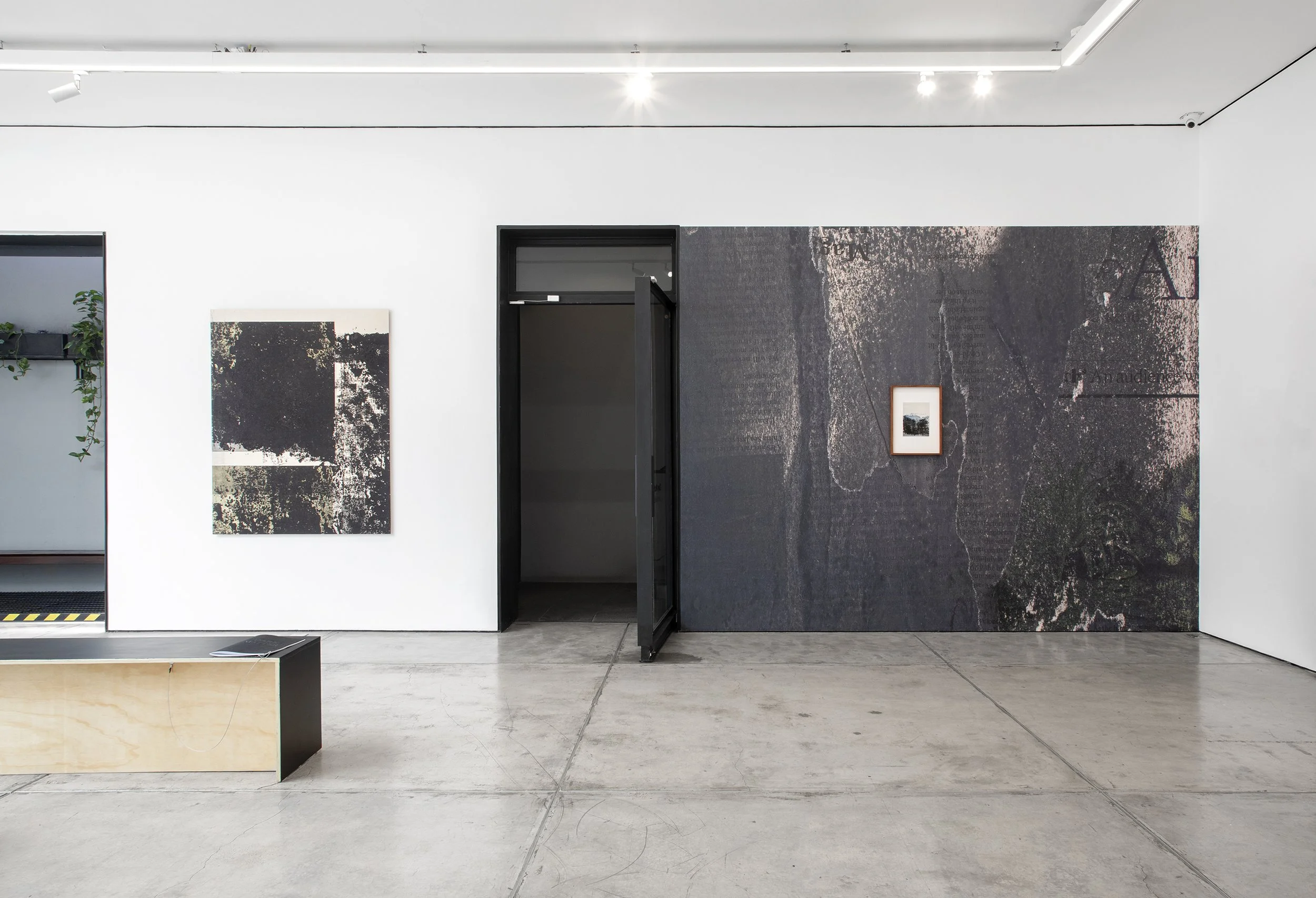
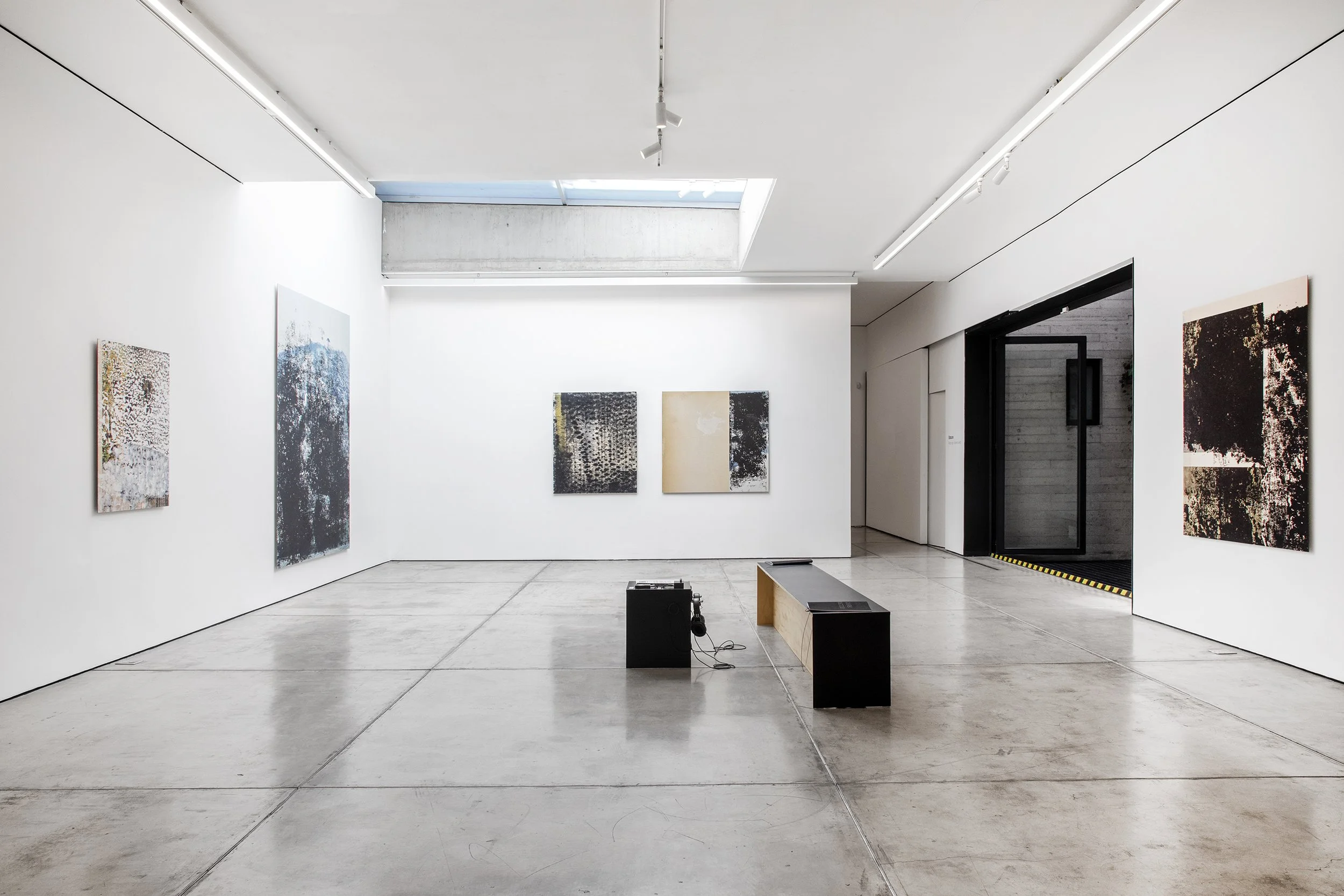
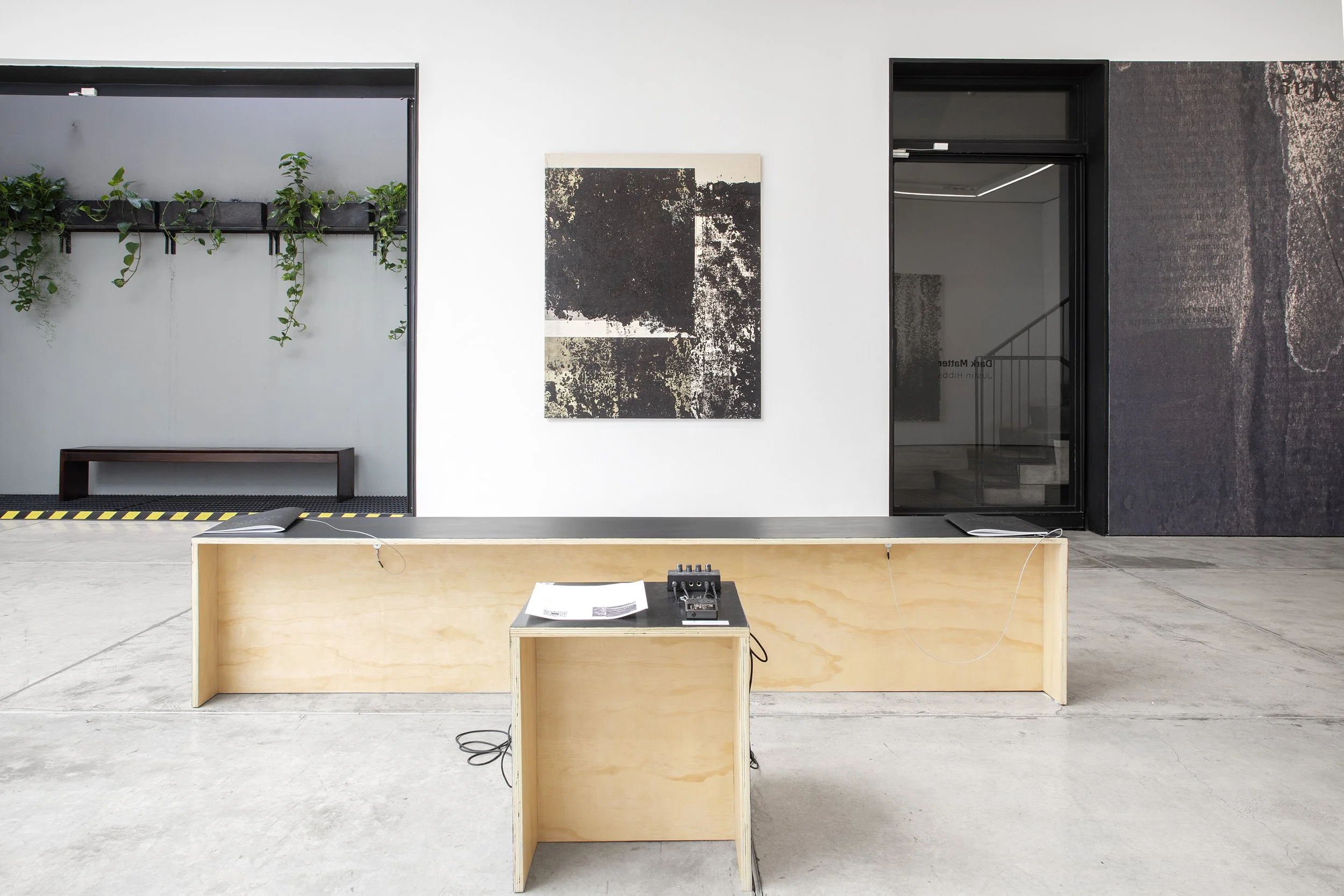
Often, in these works, thanks to Hibbs’s lively obscuring, it’s literally hard to see what the news of the day was – what we’re being asked to consider, to try and remember, is what the world per se was like in 2018, and how the past informs the present. Brexit had happened, but rising nationalism was relatively new – now, of course, it’s the global weather. Trump was in power, but Trump 1:0 was only a rehearsal for the unhinged and guardrail-assaulting despot of today. Eight years ago, before our present masks-off moment, we may have thought that things were about as bad as they could get. And things were already bad. Fell (2018–26) features a faded landscape with a cluster of buildings in the foreground, seemingly perched on a waterway; in the background, bleeding through from the back of the newsprint, is the haunted word ‘Grenfell’, referring to the badly cladded high-rise in Kensington, London, that caught fire in June 2017 and killed 70 inhabitants. Grenfell, the worst residential fire in the UK since the Second World War, has become a kind of shorthand for corporate greed, corner-cutting and, nearly a decade later, lack of justice for the bereaved.
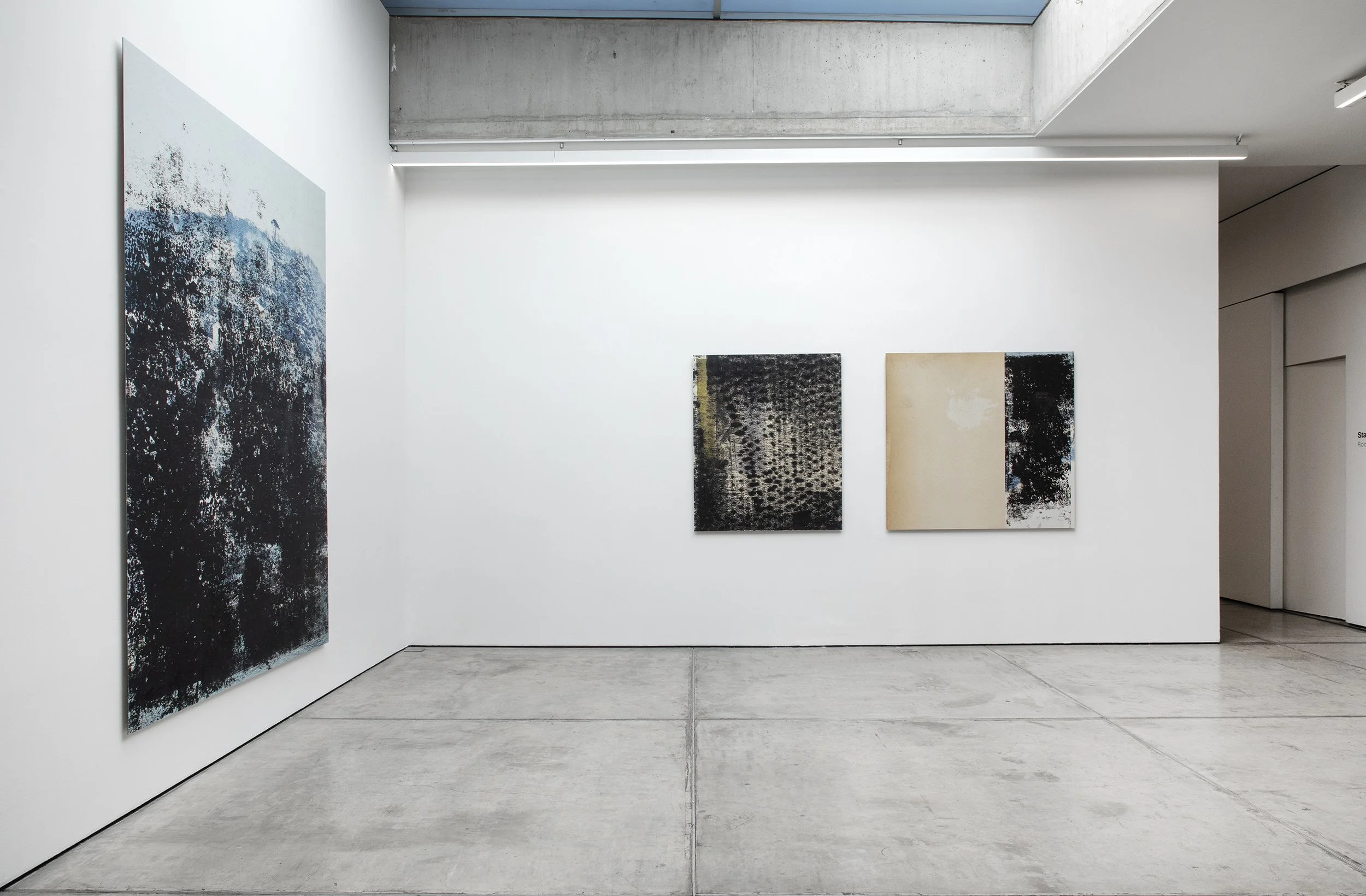
Amid Hibbs’s downbeat aesthetics, the name reappears, a reversed ghost that won’t go away, in the background of an image where, it appears, buildings have been obliterated by a pollutant cloud of black paint. In its sister work, Carbon Bloom (2018–26), the blackness swallows up even more of the landscape. The visual economy and wide inferential field here are startling, not least because of the near-accidental manner of the work’s making: the artist, thinking about something else, casually wipes out architecture that in turn has already imposed itself on nature, a sort of chain of destructive human presence. The image isn’t exactly narrative-driven, or diagnostic, but its atmosphere is something like the air, or the dirty smoke, that we presently breathe. Meanwhile, consider the correlation – or collision – between different uses of ink here. Ink on newspaper has been, for hundreds of years, a vessel of communication in a primarily analogue world; today, when that world is fading out, it feels appropriate that ink’s former use, here, meets a frayed, dissonant version of itself, as if narrating its own collapse. (To go further on this: newspapers and the mainstream used to represent a relatively shared culture of opinion, increasingly replaced by social media-driven filter bubbles, with all the anomic consequences we can already see.)
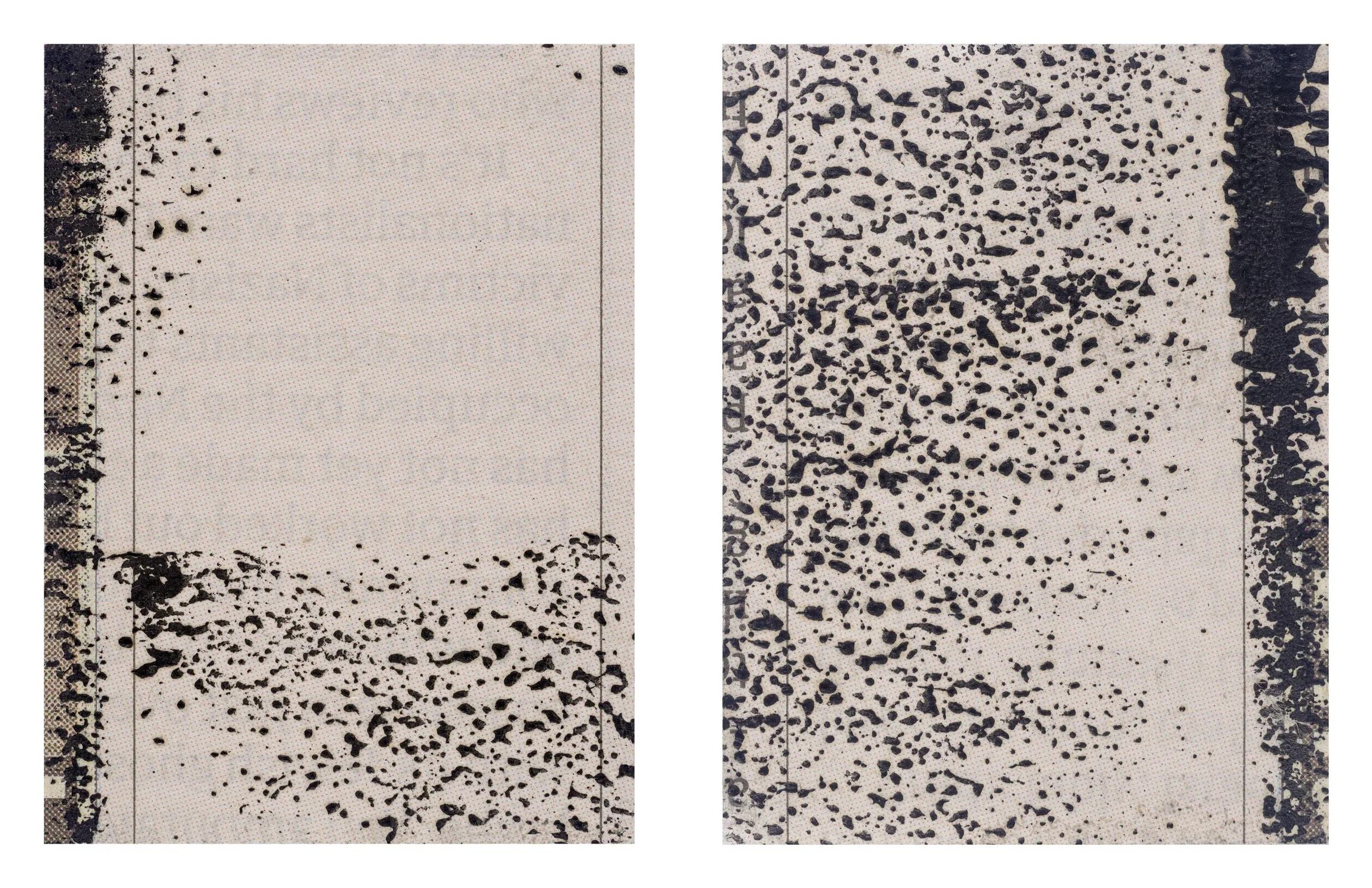
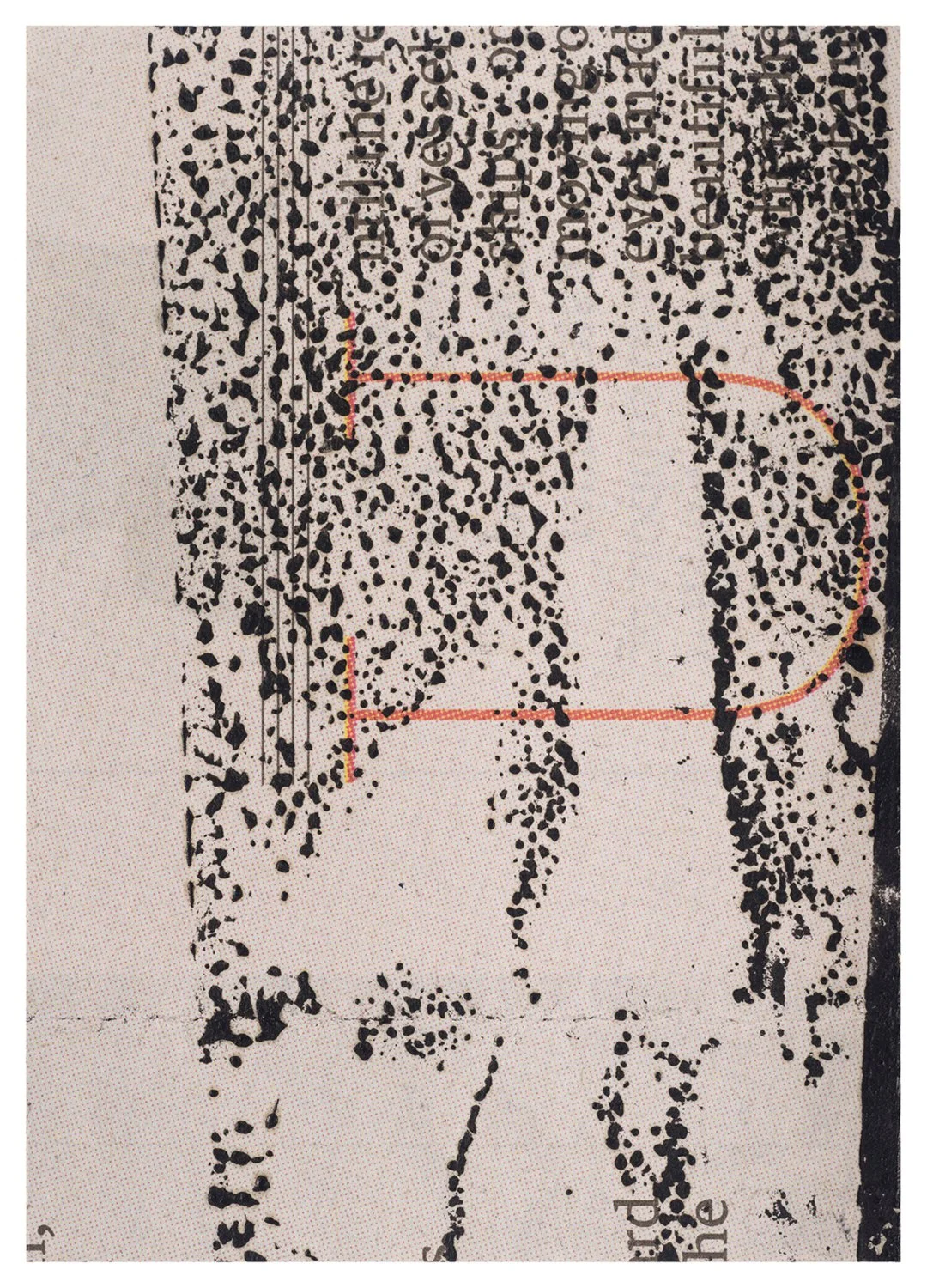
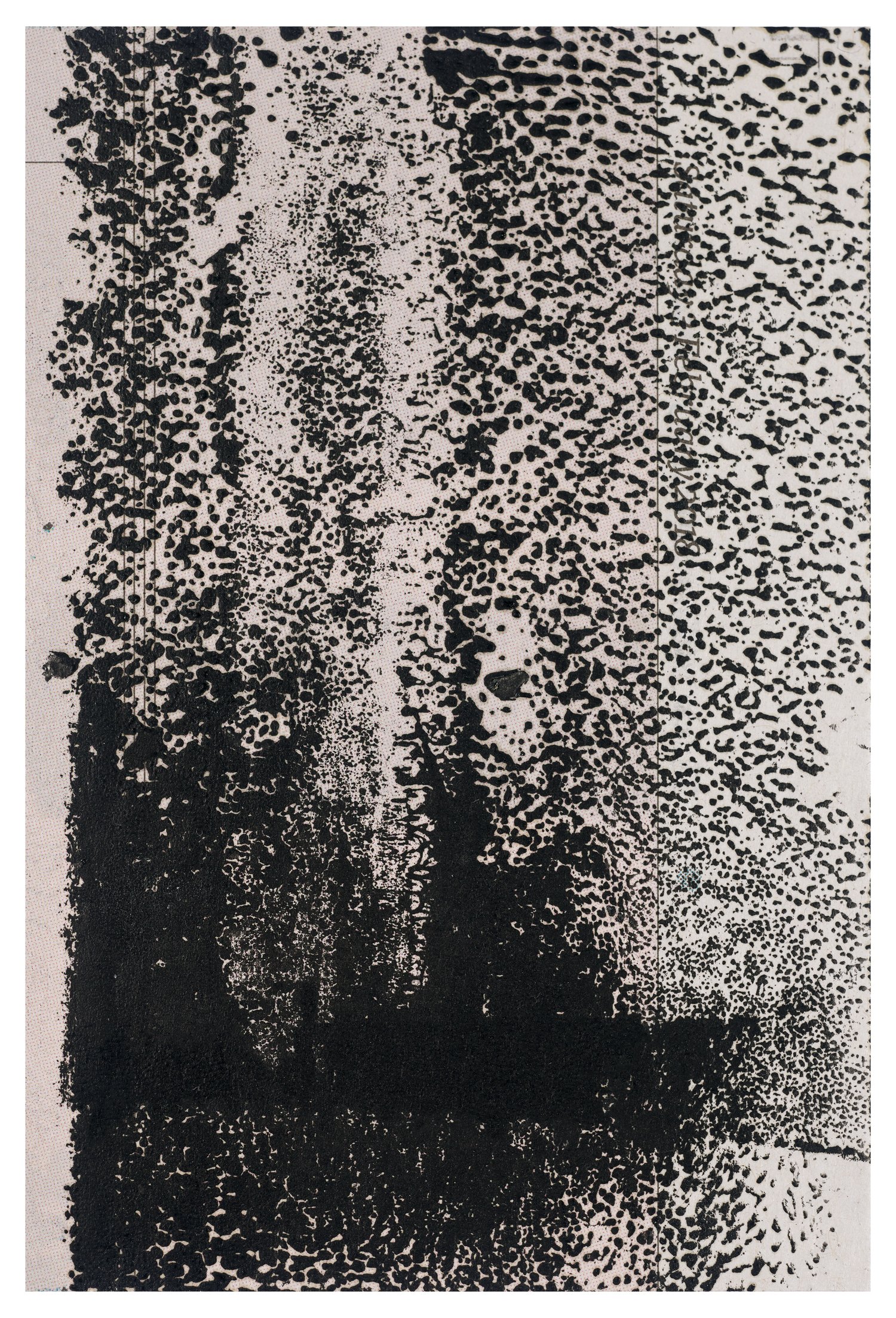
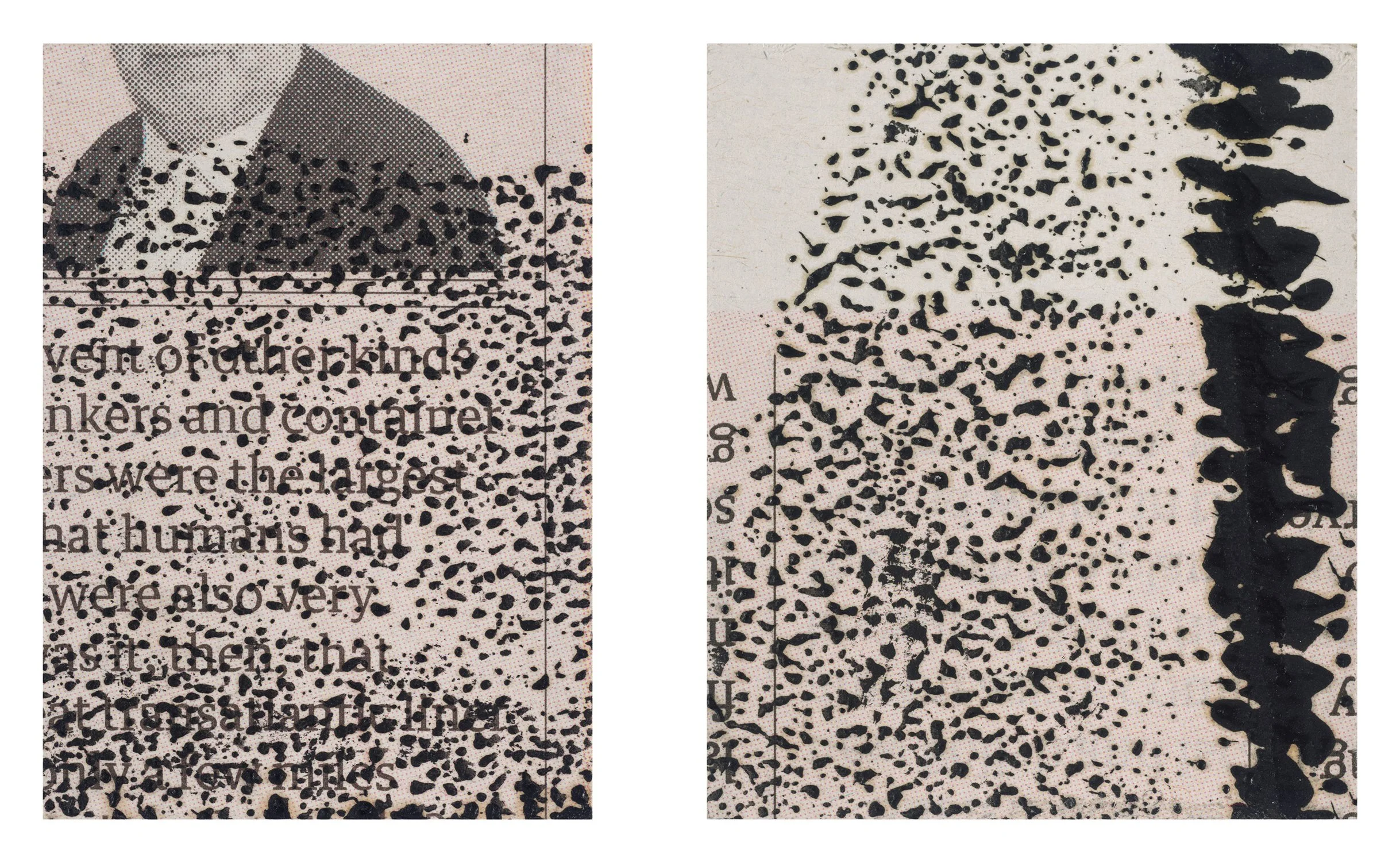
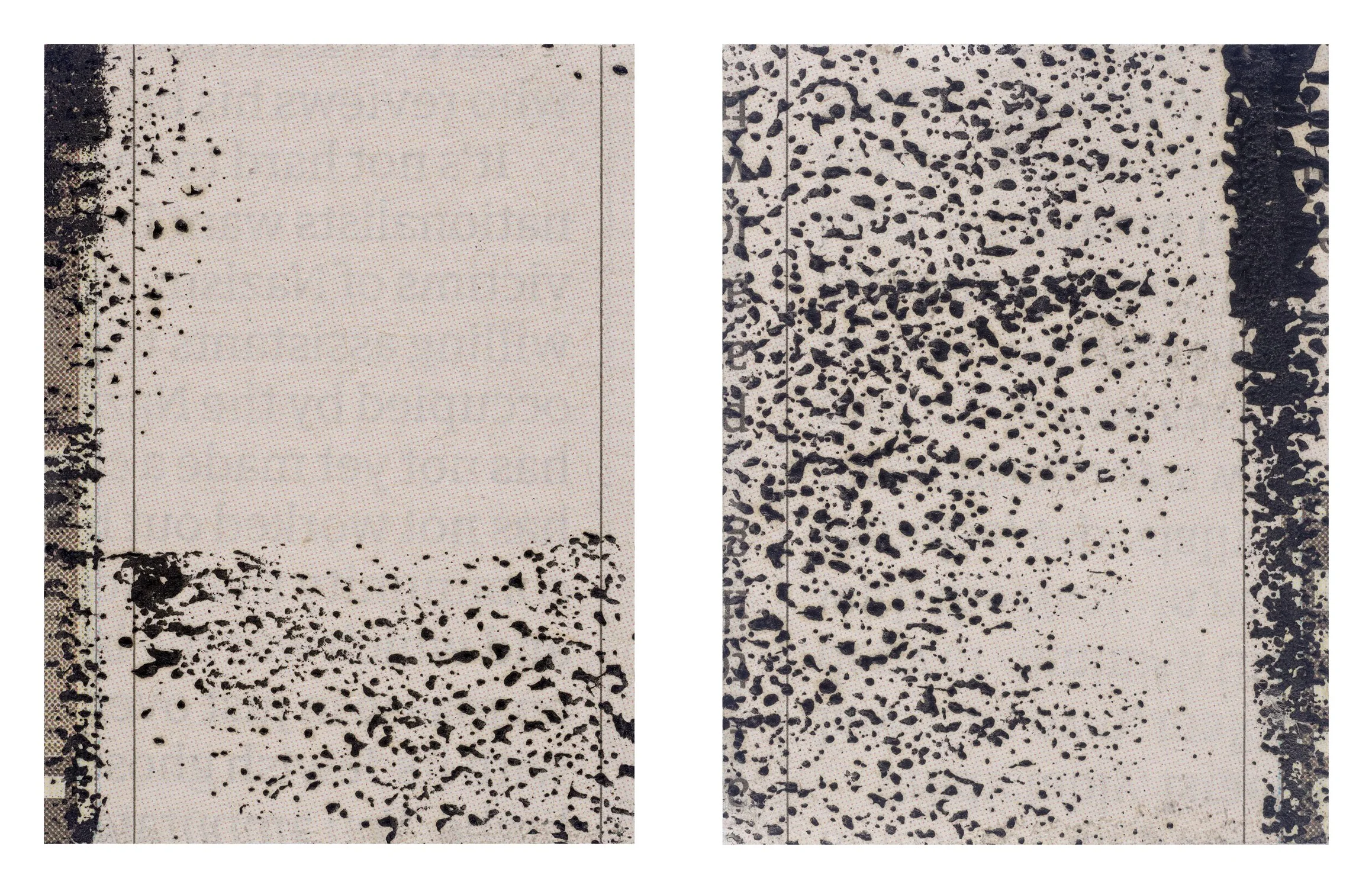
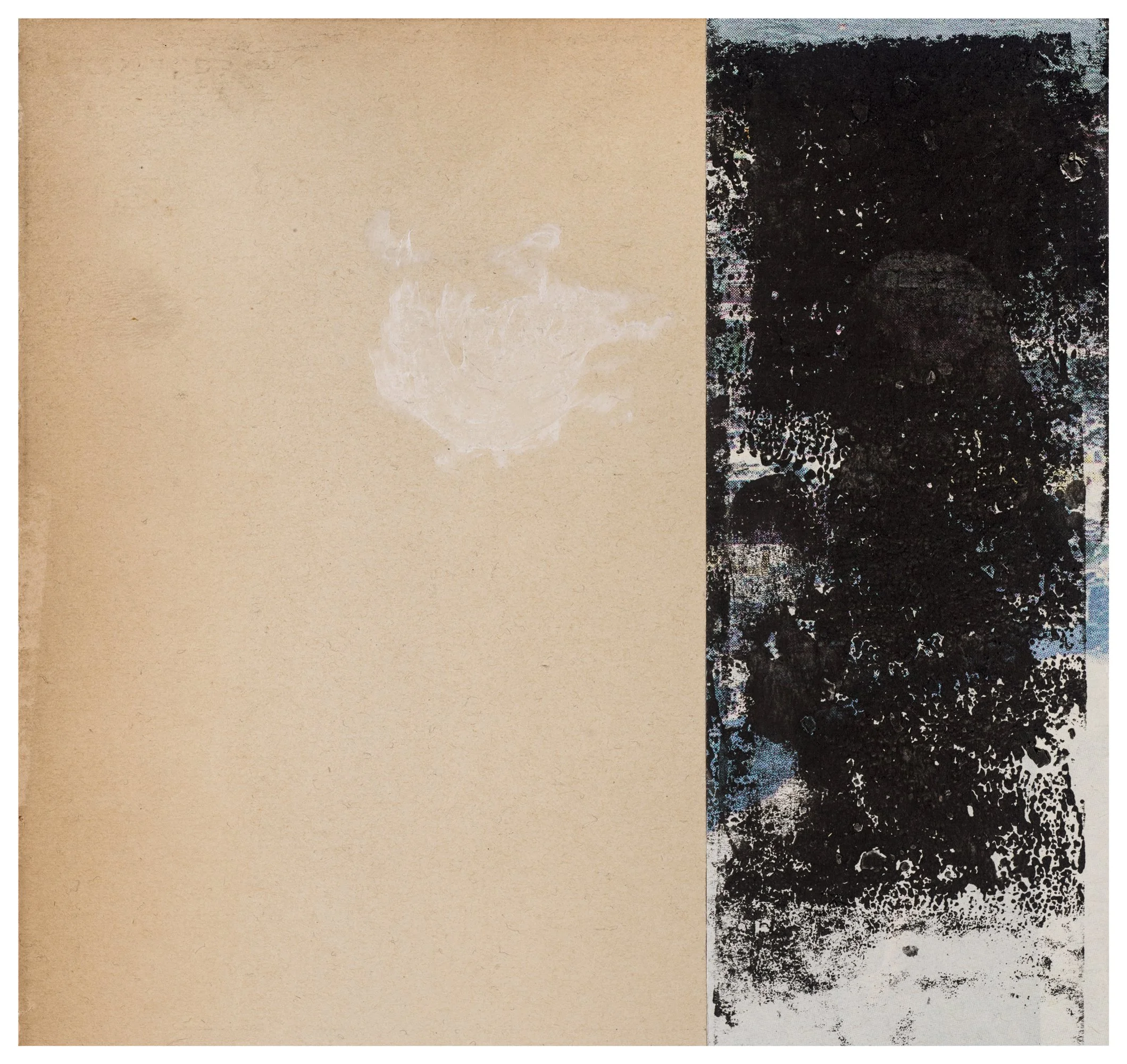
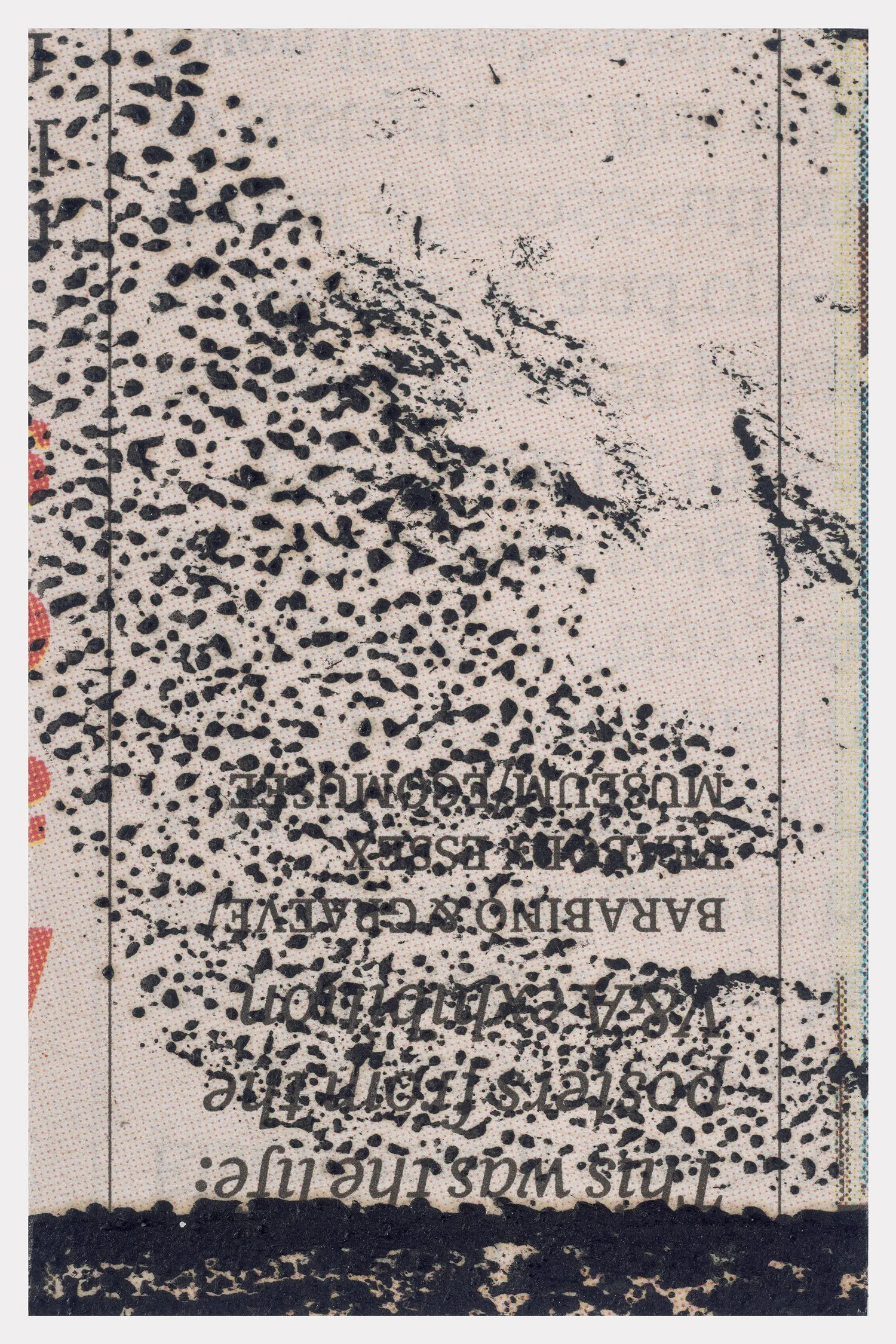
Murmuration I & II, (2018-26) Digital Prints on 230gsm paper, 40 x 29.3cm & 40 x 30cm respectively.
This is strategically deployed visual noise, then. Noise, handled right, can be articulate, can approach the condition of music. Musicians have known this for a long time: for evidence, you might go back as far as John Cage, or look to how the electronica that emerged in the 1990s folded into its textures the sound of faulty, skipping CDs, the pops and clicks of records, and subsonic rumble. The black in Hibbs’s art can feel like all these things; often, it feels like bass. Which is to say that these works are multifarious: they have a surface sombreness about them, but they are also concerned with how creativity seeds itself from surprising places, driven by choice, germinal, if you know how to germinate.
Consider, in this regard, the role of actual music in this exhibition. If a question Hibbs is raising here is where the edges of his work are – a question literally built into his decision to re-crop larger works into, or towards, different meanings – then we can say that the art experience here is the visual plus the sonic: you look at the work, or are encouraged to, while listening to compositions involving modular synths and horns by Synthesis Sound Archive, featuring Hibbs’s longstanding collaborators Ben Lancaster and Sean Roche, with contributions by Francine Loze on cello and David X Green on piano, and made in response to the visuals. (Hibbs, in a daisy-chain, responds in turn to the music, and so on.) These pieces not only encourage you to see the visuals in different, synaesthetic, pattern-finding ways – what you see inflects what you hear and vice versa – but reinforce that Hibbs’s art is a constant relay – between visual and sonic, pattern and chaos, music and noise, abstraction and representation, art and world, present and past.
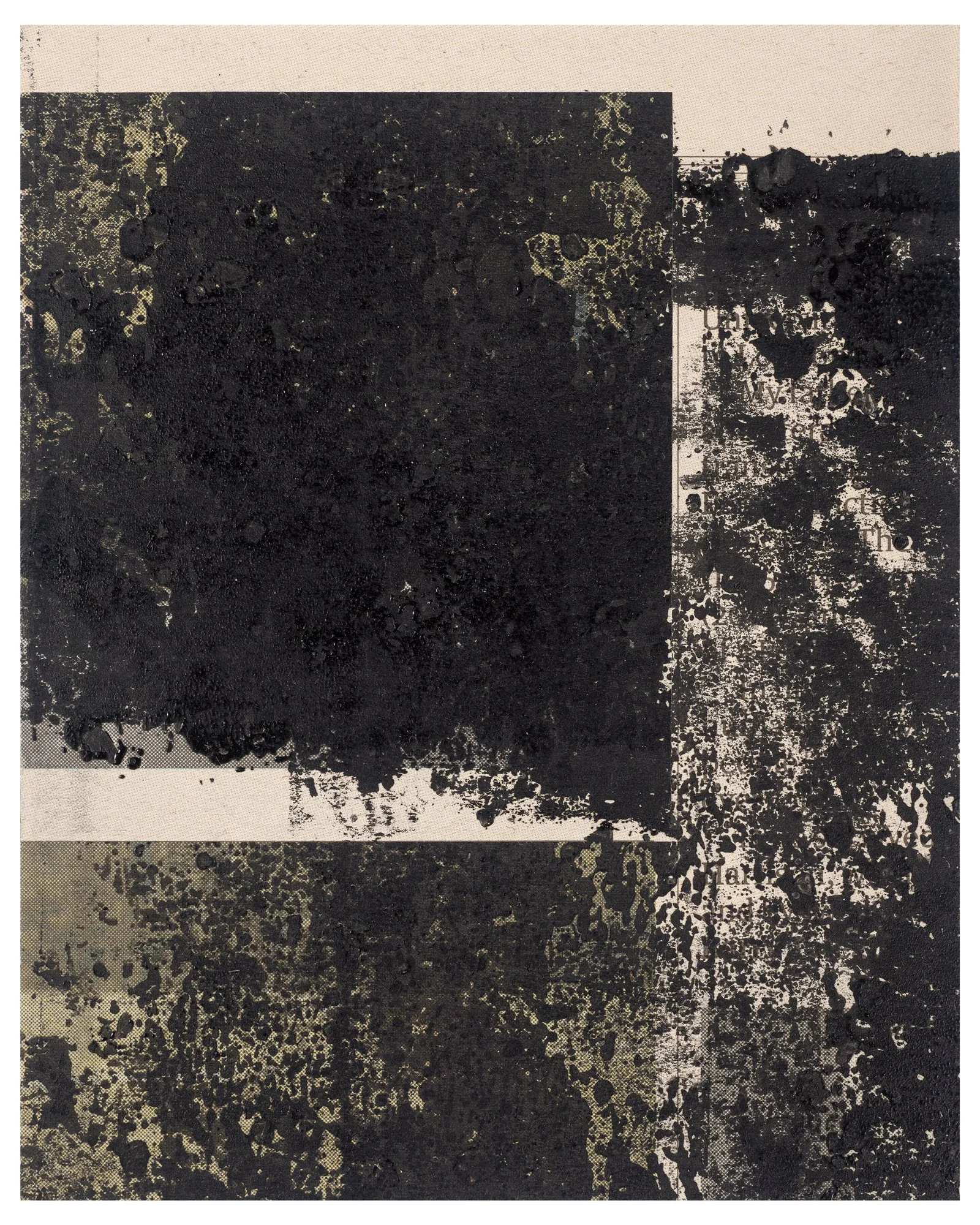
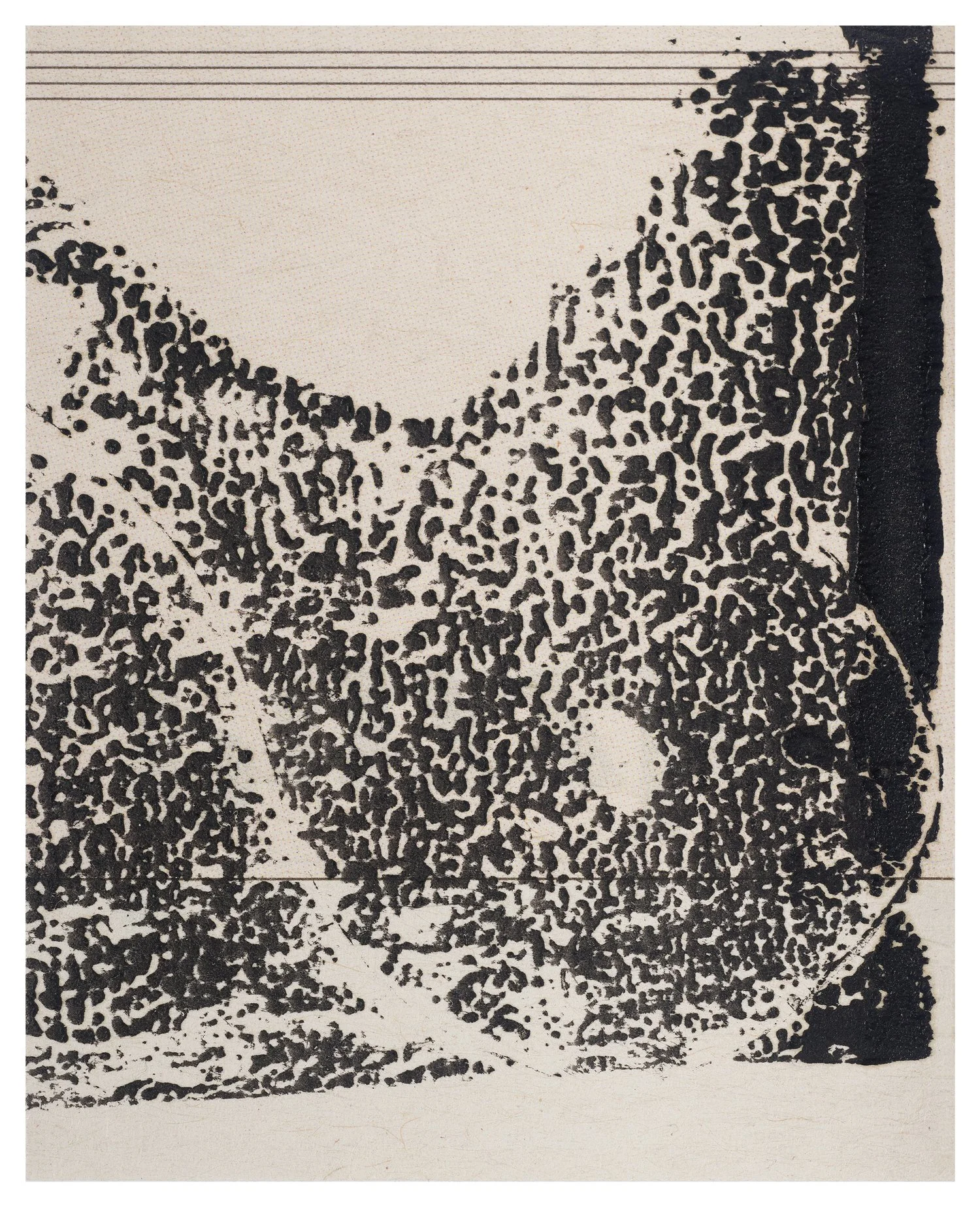
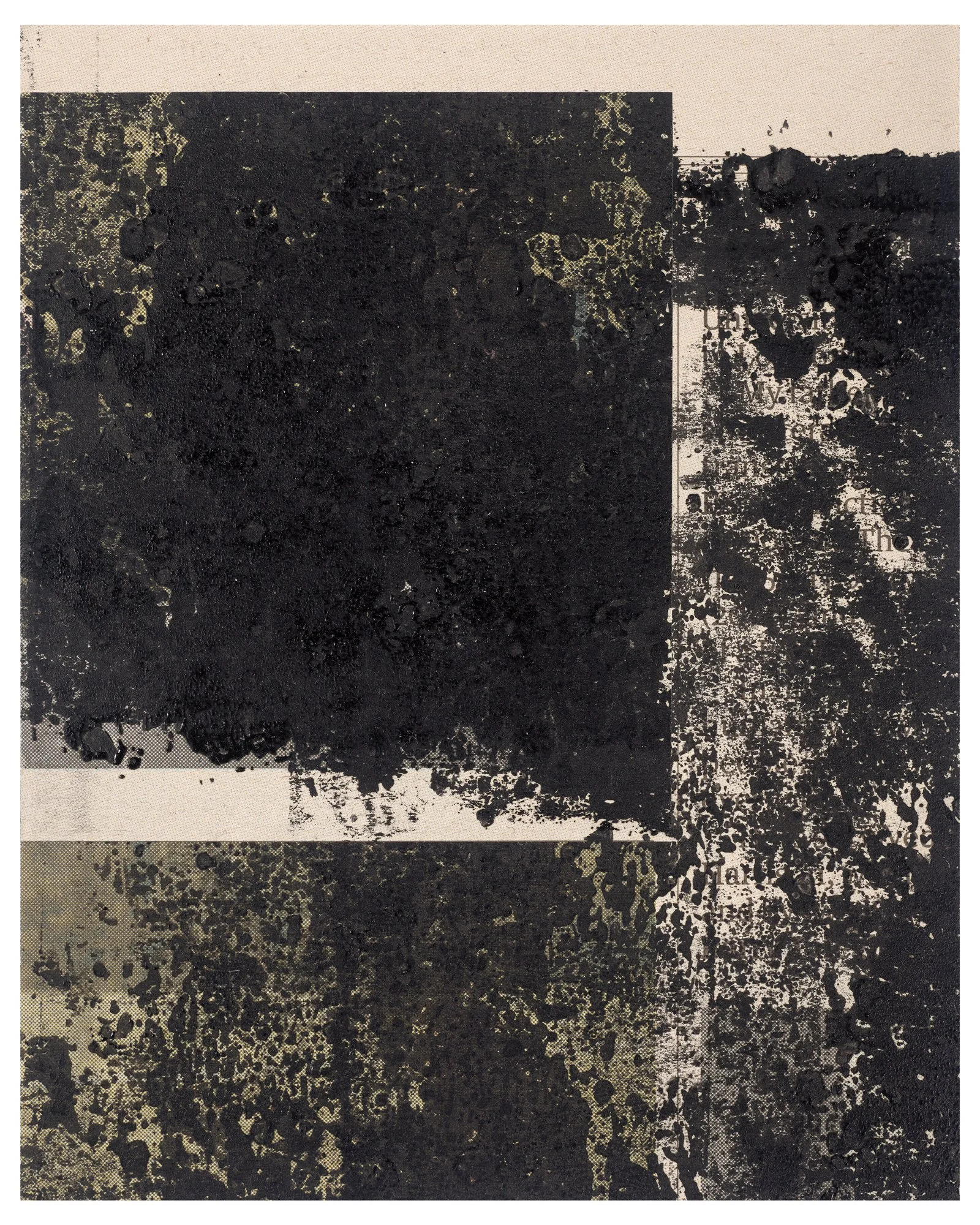
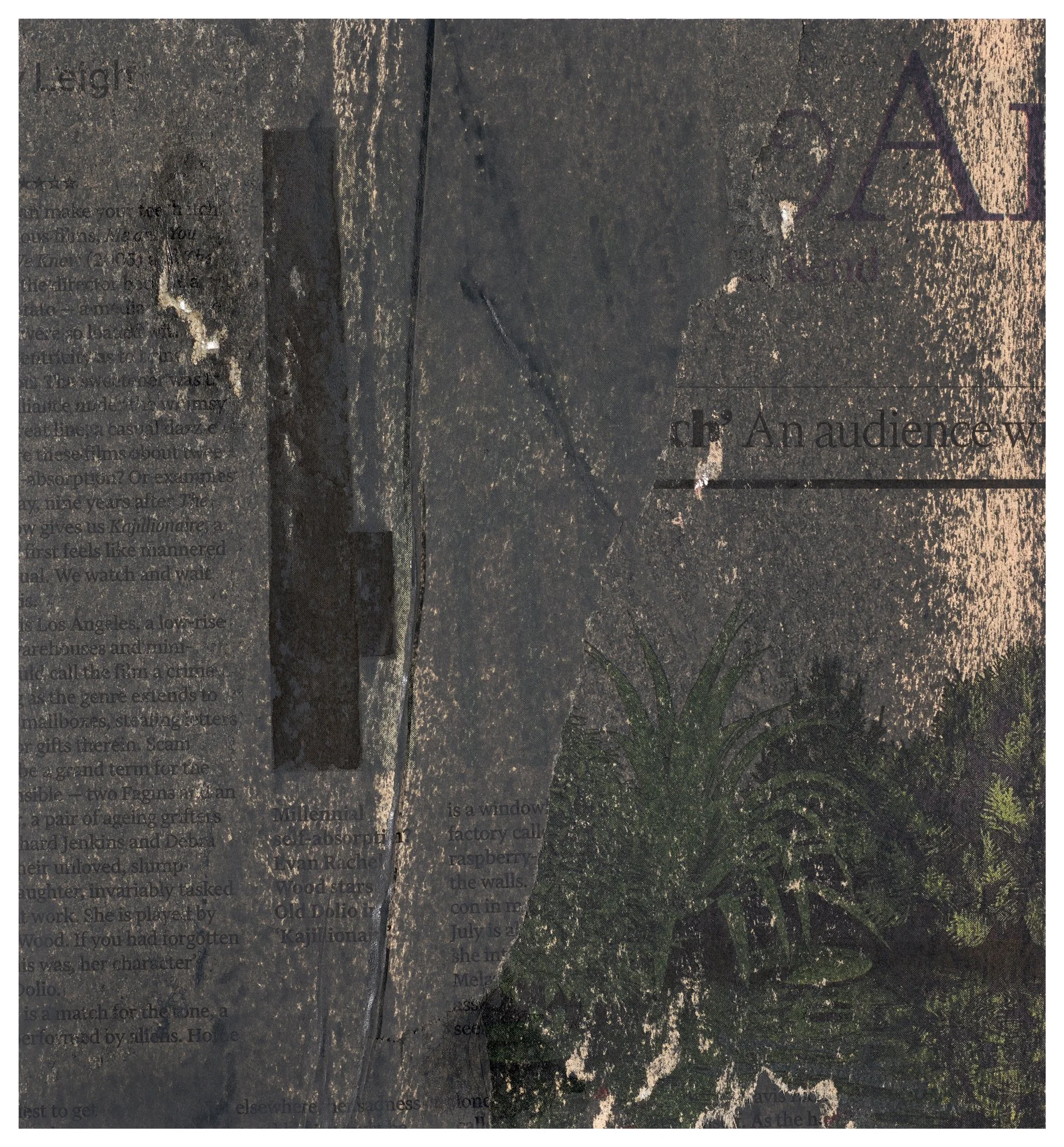
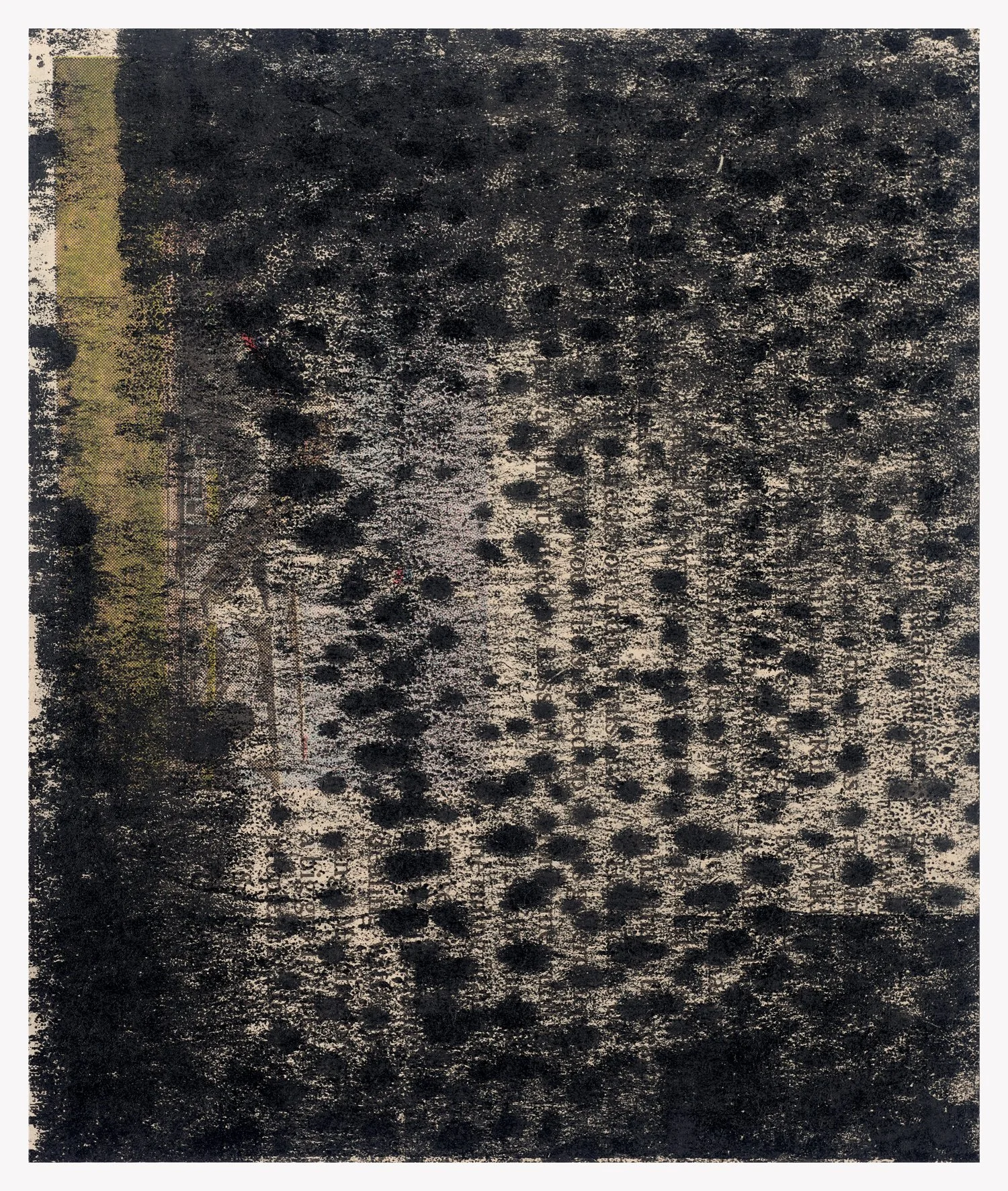
Odyssey of the Oblong Square (After S.R. and K.M.) (2018–26), Digital Print on 230gsm Matt paper, 150cm x120cm
That’s made powerfully explicit in Odyssey of the Oblong Square (After S.R. and K.M.) (2018–26), whose allusions ask for a bit of unpacking. The title comes from a 1974 album by jazz drummer and bandleader Steve Reid, which conflates free jazz with rock-related drumming – signal and noise aligned and transvalued again, if you like, deliberation and in-the-moment happenstance. (The parallels with how Hibbs made this body of work ought to be clear.) If ‘S.R.’ is Reid, ‘K.M.’ is the Russian suprematist painter Kasimir Malevich, whose Black Square (1915) is foundational of non-representative art; x-rays, though, have revealed that under Malevich’s black abstraction is a representational painting, annotated ‘battle of Negroes in a cave’. Odyssey enfolds these reference points in an image in which a black rectangle, redolent of the geometric certainties of modernism, meets a sideways scree of rollered black paint. In this despoilation is an abstract narrative about the undoing of industrial modernity, the difference between the hopes of the early 20th century, the hard realities of the early 21st, the bleak continuity of racism.
Again, though, it’s a space to think in, to think with, not a totalising diagnosis. It’s here that, for all the soundsystem bass-weight of Hibbs’s artworks, and for their frequent resistance to colour, they glimmer with possibility. For whatever the seriousness of what they’re founded in, these are also works concerned with how you go forward, how artfulness can arise almost shockingly from unpromising foundations: like rejected materials, like static buzz, like old news. They are multivalent, spacious proposals built from all manner of things that another maker might shy away from. And they are meditations, almost reassuringly, on where art begins, the many unlikely places it can begin, the possibility of tomorrow, even when things seem bleak. For Hibbs, there is no blank canvas or origin gesture: something is always arising from the already-there and responding to it, whether that’s an artwork coming from earlier art, music coming from art, art coming from that music, or the world we live in coming from the world of eight years ago, now made legible. The background grind of the news, dirtied-up newspapers, dragged black paint, can also be music without losing touch with their essential noise-ness. It all depends how someone hears it; how they recompose it so that we, to our surprise, can hear it too.
Martin Herbert
Press Release:
Arroniz proudly unveils a new body of work by British artist Justin Hibbs, celebrating his return for a second solo show at the gallery. The exhibition delves into a dynamic interplay between sound and image, highlighting the tension between analogue, mechanised and digital modes production and reproduction. Hibbs conjures a landscape transformed by swiftly shifting information networks, where once-stable channels like newspapers dissolve into a fragmented architecture, and dissonance pulses through both the visual and sonic.
This exhibition picks up threads from his previous show, ‘Between, Before and After’ (2018), the passage of time breathing new life into the works on display. Fragile scraps of newspaper, accidental remnants once overlooked and salvaged from the 2018 project, now reappear transformed—magnified into striking enlargements at monumental scale. Their discordant marks and fractured narratives circle back, echoing a moment that seemed to anticipate the present. Back then, the proliferation of digital information platforms and a post-truth reality were still emergent in our culture and political discourse, today these shifts have accelerated reshaping our information landscape and leaving the authority of traditional media hanging by a thread. The works ask probing questions how visual art might address this moment, a shifting, borderless terrain, whilst celebrating the pathos and beauty to be found in these disintegrating fragments suspended in time.
The immersive sound work featured in the exhibition is composed and produced by Synthesis Sound Archive, Hibbs’ ongoing collaboration with musicians Ben Lancaster (modular Synths) and Sean Roche (Saxophone) with contributions from Francine Loze, cello and David X Green piano. The collective weaves together music and visual art, delving into the vibrant connections between underground music’s storied past, its evolving present, and the visual cultures that orbit these sonic worlds.
This exhibition has been Proudly supported by Rosalind Davis, Daisy Green Collection & Coloursonic (London).